Planets
Sade Sati explained: what Saturn’s seven and a half years really mean
Why Saturn’s passage over your Moon sign lasts about seven and a half years, what each phase is traditionally linked with, and why it is not the curse it is often made out to be.

Few phrases in Indian astrology cause as much worry as “Sade Sati”. It is often described as seven and a half years of bad luck. The tradition itself is more careful: it describes a demanding period that asks for patience and effort, and one that almost everyone meets more than once in a long life.
What Sade Sati is
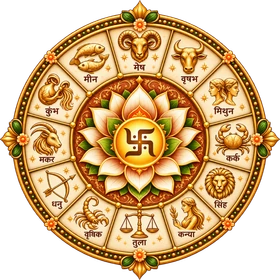
Saturn is the slowest of the classical grahas. It takes about twenty-nine and a half years to travel round the zodiac, spending roughly two and a half years in each sign. Sade Sati, “seven and a half”, is the time Saturn spends in the sign before your Moon sign, in your Moon sign itself, and in the sign after it: three signs, about two and a half years each.
Because it is counted from the Moon sign, not from the Sun sign or the Lagna, everyone with the same Moon sign shares the same Sade Sati dates. Most people live through it two or three times.
The three phases
Each phase is traditionally given its own character:
- Rising, the 12th from the Moon: linked with expenses, restlessness, travel, and letting go of what has run its course.
- Peak, over the Moon: the most intense phase in the tradition, with pressure on the mind and on responsibilities, and lessons in patience.
- Setting, the 2nd from the Moon: linked with family, finances and speech, as the period winds down.
These are tendencies described by tradition, not events that must happen. How they play out depends on the whole chart: Saturn’s own strength and the houses it rules, the Lagna, and the dasha that is running at the time.
When Saturn turns back
Every year Saturn appears to move backwards for about four and a half months: its retrograde period. Near the edge of a sign this can take it back into the previous sign for a few months, so a phase can begin, pause and then resume. That is why exact dates matter more than rounded ones.
Dhaiya, the smaller cousin
Saturn’s stay in the 4th or the 8th sign from the Moon is called Dhaiya, or the small panoti; the 8th is also known as Ashtama Shani. It lasts about two and a half years, and tradition reads it in a similar way to Sade Sati.
Saturn is a teacher, not a villain
In Jyotisha, Saturn stands for time, discipline, duty and the results of past effort. Its periods are often remembered as hard, but also as the years in which people built something that lasted: a career, a home, a steadier character. Many astrologers describe Sade Sati as a period that rewards honest work and punishes shortcuts.
What tradition suggests
The traditional responses to Sade Sati are simple, and mostly inward:
- Discipline: keeping regular routines and finishing what you start.
- Service: helping elders, workers and people in need, which tradition associates with Saturn.
- Prayer: worship of Shani or Hanuman on Saturdays, or reciting the Shani mantra.
- Patience: avoiding rash decisions, large gambles and shortcuts.
Be wary of anyone who asks for large payments to “remove” Sade Sati. No ritual moves Saturn; practices like these are about meeting the period well. An astrologer can help you read it in the context of your own chart.
Checking your own dates
Stella’s Kundli calculator lists every Sade Sati and Dhaiya in your first hundred years, each phase dated from Saturn’s actual movement, including the months when Saturn steps back into the previous sign.
This article is general information about the traditions of Indian astrology, written by Stella Editorial. It is not a personal reading, a prediction or professional advice. For guidance on your own chart, talk to an astrologer.