Ganesha Pooja
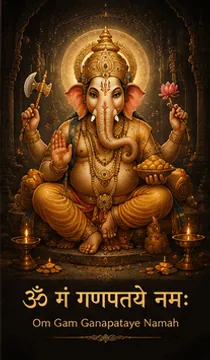
Before any new beginning: a home, a business, a wedding, an examination. Ganesha is worshipped first in every ritual, and above all on Ganesh Chaturthi and on each Sankashti Chaturthi.
Pooja · पूजा एवं अनुष्ठान
Explore meaningful rituals for your intention, your family and your next chapter.
 A little perspective. A more mindful day.
Start here
Pooja (puja) is an act of worship: offering devotion, gratitude and prayer to a deity. It can be a few quiet minutes before a lamp at home each morning, or a day-long ceremony led by priests with fire, chanting and many offerings.
At its heart, a pooja welcomes the deity as an honoured guest. The worshipper invites, bathes, adorns, feeds and praises the divine, and asks for blessings for the family, a new beginning or a difficult time. The form varies by region, family tradition and deity, but the spirit is the same: attention, devotion and intention.
In the astrological tradition, poojas are also performed as remedies: to honour a planet whose period is running, or to seek strength before an important step. They are expressions of faith; they do not guarantee health, wealth or any other outcome.
The ritual
Most poojas follow the same order, however long or short they are:
Sankalpa: the intention: the worshipper states who is praying, where, when and for what purpose.
Ganesha first: almost every pooja begins with a prayer to Ganesha, the remover of obstacles.
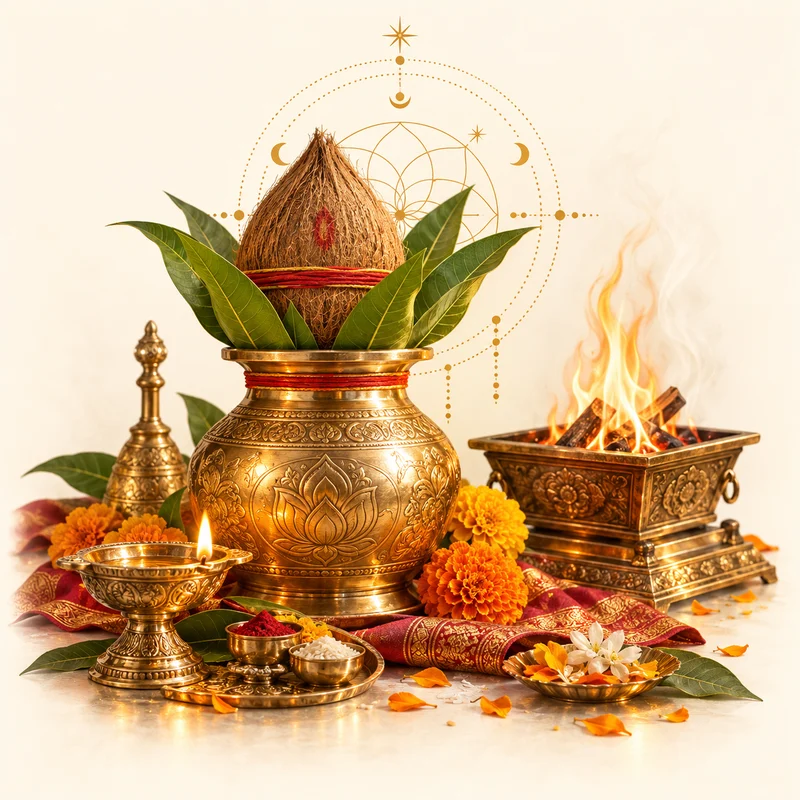
Kalash sthapana: a pot of water crowned with mango leaves and a coconut is set up to hold the divine presence.
Avahana: the invitation: the deity is invited into the image or the kalash with mantras.
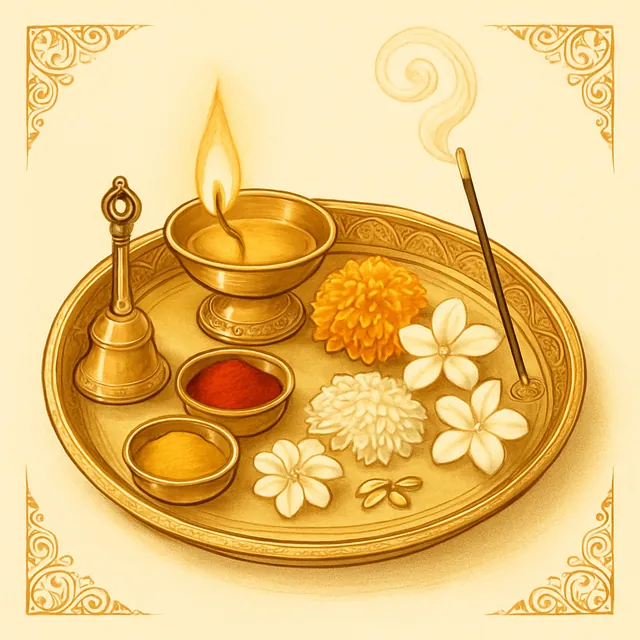
The offerings (upachara): water, a bath, clothes, sandalwood, flowers, incense, a lamp and food, often sixteen in all (Shodashopachara).
Aarti and prasad: lamps are waved before the deity with a song, and the blessed food is shared.
Larger ceremonies add a havan or homa, offerings into a sacred fire, and the recitation of stotras or mantras a fixed number of times (jaap).
Deities and occasions
Each deity is worshipped for particular blessings and on particular days. These are among the poojas families perform most often:
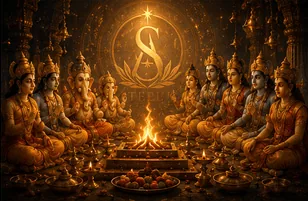
Before any new beginning: a home, a business, a wedding, an examination. Ganesha is worshipped first in every ritual, and above all on Ganesh Chaturthi and on each Sankashti Chaturthi.
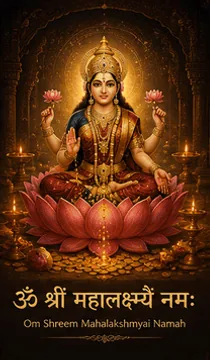
For prosperity and the wellbeing of the home, above all on Diwali night, and on Fridays. Often performed together with Ganesha and Kubera.

The Shiva lingam is bathed with water, milk, honey and other offerings while the Rudram is chanted. Performed on Mondays, in the month of Shravan and on Maha Shivaratri, for peace, health and the removal of difficulties.

A household worship of Vishnu as Satyanarayan with the reading of his story, commonly held on Purnima, after a wish is fulfilled, or at a housewarming.
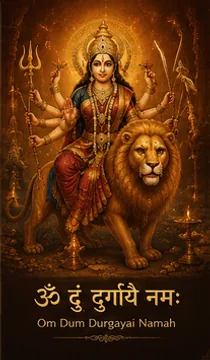
Worship of the Mother Goddess for strength and protection, above all in the nine nights of Navratri.

For courage, protection and steadiness, on Tuesdays and Saturdays; the Hanuman Chalisa is often recited during Saturn’s difficult periods.
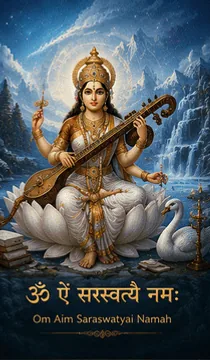
For learning, music and the arts, on Vasant Panchami and before examinations or the start of study.
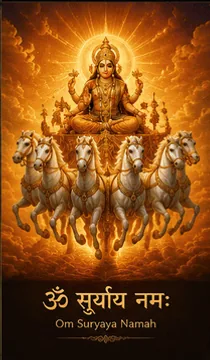
Worship of the Sun, and of all nine grahas together in a Navagraha Shanti, is the pooja most closely tied to astrology: performed when a planet’s period is difficult or before a major undertaking.
At home
A daily pooja needs no priest and very little time. Many families follow a simple order:
Prepare: bathe, and clean the prayer space, ideally in the north-east of the home.
Light the lamp: a diya with ghee or oil, and an incense stick.
Offer: water, flowers, a little rice or sweets, whatever you have with care.
Pray: chant a mantra you know, such as the deity’s name mantra, or simply speak your prayer.
Close with aarti: wave the lamp, then share the offering as prasad.
Stella does not arrange priests or perform poojas today. The planner on this page helps you think through an occasion and prepare; it books no one and takes no payment. If you would like guidance on which pooja suits your situation and when to perform it, an astrologer can advise you in a consultation. Be wary of anyone who says a misfortune will follow unless you pay for a ritual.
Explore an occasion, review the sample itinerary and create a local planning summary.
Traditionally offered at the start of a new endeavour, with an intention of clarity and a thoughtful beginning.
Sequence, materials and duration vary by practitioner and tradition. Confirm before booking.
Before you begin
Good questions
No. It creates a local demo plan only. No priest is assigned and no money is collected.
Confirm the exact material list, delivery arrangements and total charge with the provider before making a real booking.
No. Rituals are expressions of faith and tradition; they do not guarantee health, wealth, relationships or other outcomes.
Explore our astrologer profiles and find a guide for your next step.