STELLAASTROLOGY

Muhurta · शुभ मुहूर्त

Begin with intention

Plan a meaningful beginning, with room for tradition and the realities of everyday life.

Muhurta illustration inspired by Indian celestial artA little perspective. A more mindful day.

Start here

What is a Muhurta?

A muhurta is, first of all, a unit of time: one-thirtieth of a day, about 48 minutes. Fifteen muhurtas make up the daytime and fifteen the night, each with its own name and character.

The word has come to mean an auspicious time: the moment chosen to begin something important so that it starts under favourable conditions. Choosing one is an old branch of Jyotisha, called Muhurta Shastra or electional astrology, and it is why weddings in India are often held at very precise times, sometimes late at night.

The idea is simple: as a birth chart describes a person, the sky at the start of an undertaking colours the undertaking. A good muhurta is chosen for a purpose, a place and the people involved.
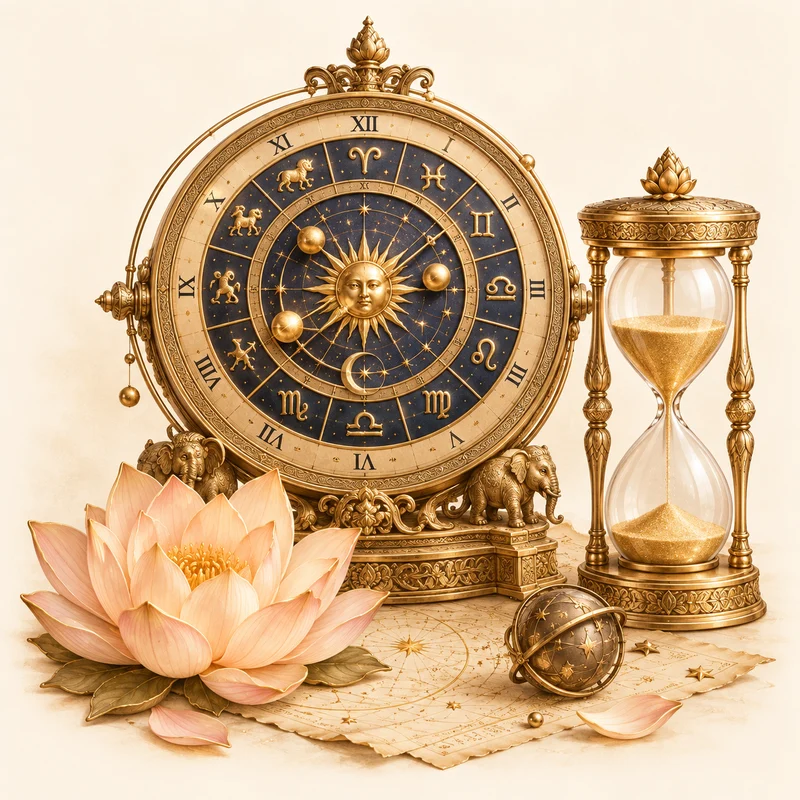
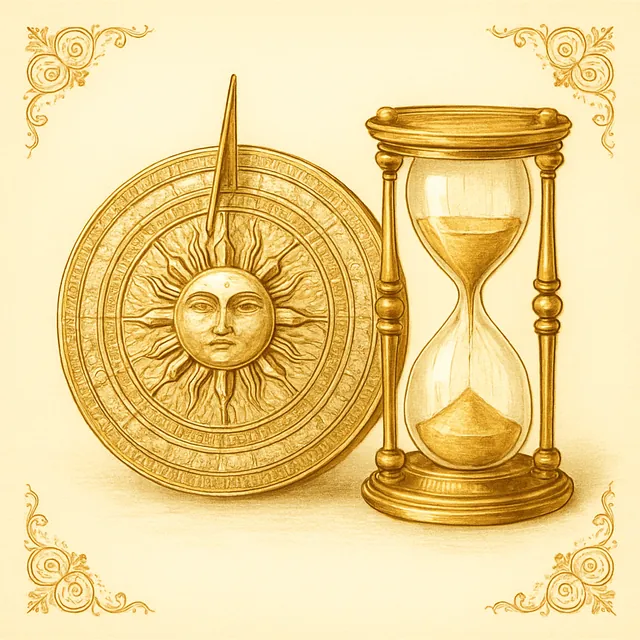
A golden astronomical dial with the Sun at its centre beside an hourglass

How it is chosen

What goes into a muhurta

An astrologer works through several layers, from the calendar to the individual chart:

Abhijit, around noonSunriseSunset30muhurtas in a dayabout 48 minutes each15 by day, 15 by night
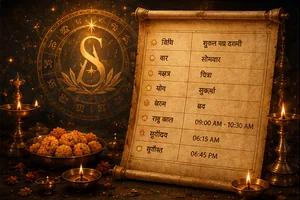
A Panchang scroll beside marigolds and a lamp

The five limbs of the day (Panchang Shuddhi)

The first test is the Panchang: a favourable tithi (avoiding Rikta tithis such as Chaturthi, Navami and Chaturdashi for most beginnings, and Amavasya), a suitable weekday, a nakshatra that suits the purpose, a good yoga, and a karana other than Vishti (Bhadra).

SunriseSunsetMidnightNext sunriseOne Hindu day runs from sunrise to sunrise

Times that are avoided

Tradition sets aside certain periods for new beginnings: Rahu Kaal (one-eighth of the daytime, a different part each weekday), Yamaganda and Gulika Kaal, Bhadra, the days around an eclipse, and for weddings the months when Jupiter or Venus is combust, and Kharmas, when the Sun is in Sagittarius or Pisces.

A golden Sun

Abhijit and Brahma muhurta

Abhijit muhurta, the eighth muhurta of the day around local noon, is widely treated as favourable for most work when no better time is available. Brahma muhurta, about an hour and a half before sunrise, is the traditional time for prayer, meditation and study.

A golden crescent Moon

Your own chart: Chandrabalam and Tarabalam

A muhurta is finally checked against the birth chart of the person concerned. Chandrabalam asks whether the Moon on that day sits well from your Moon sign; Tarabalam counts the day’s nakshatra from your birth nakshatra. A date that suits one person may not suit another, which is why the best muhurtas are chosen individually.

Occasions

Muhurtas people ask for most

Each occasion has its own traditional preferences for tithi, nakshatra and month:

  • Two gold rings on a lotus

    Vivah (marriage): the most carefully chosen of all: favourable months, the couple’s charts, and a precise lagna at the time of the vows.

  • A house with a brass compass and a rolled plan

    Griha Pravesh (housewarming): entering a new home on a fixed nakshatra and a good tithi, usually avoiding the monsoon months.

  • Brass scales, coins and a ledger

    Business and new ventures: opening a shop or office, signing agreements, a first sale.

  • Golden stars across the sky

    Namkaran and Annaprashan: a child’s naming ceremony and first solid food, traditionally on chosen days after birth.

  • An open book and a telescope on a terrace

    Vehicle and property purchase: buying land, a home or a vehicle on a day with a fixed or favourable nakshatra.

  • The planet Jupiter

    Travel and study: setting out on a journey, or beginning education (Vidyarambh), often on a Thursday.

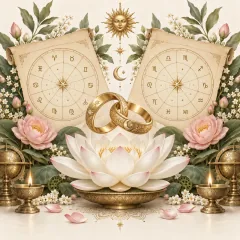
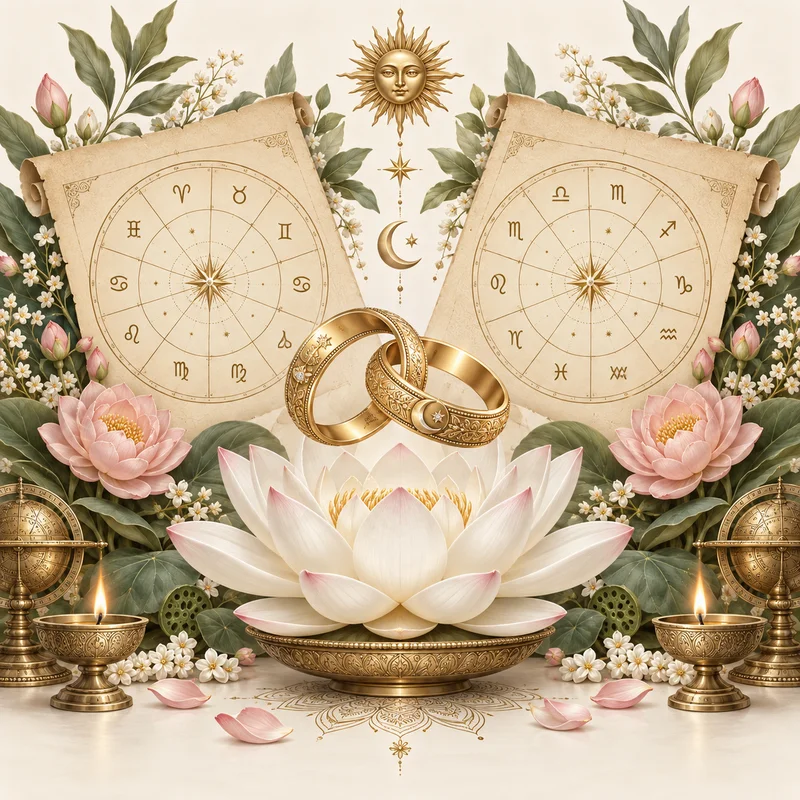
Two golden rings on a lotus between two birth charts

Before you plan

Choosing your muhurta

A few practical points help both you and your astrologer:

  • Give a date range: the wider the window, the better the muhurta that can be found.

  • Share the birth details: of the people the event is for; the muhurta is checked against their charts.

  • Name the place: timings depend on local sunrise, so the city of the event matters.

  • Say what is practical: venue bookings, travel, work and safety come first; a good astrologer works within them.

The planner on this page creates illustrative options inside your dates to help you prepare; they are not calculated auspicious timings. For a real muhurta, book a call or a chat with an astrologer. A muhurta is a tradition of good beginnings; it does not guarantee how anything turns out.

A brass kalash and a lit diya with flowers
✧ Interactive preview · Free to explore

Make space for a meaningful beginning

Create an illustrative shortlist inside your preferred dates. These are planning options, not verified auspicious timings.

District headquarters: New Delhi · 28.6139, 77.209

Your beginning, your possibilities

Choose an event and a date range to build a shortlist for discussion.

Before you begin

Come as you are.
Bring a little context.

  • The event and its location
  • Your earliest and latest possible dates
  • Any non-negotiable practical requirements
  • Birth details if your practitioner requests them

Good questions

A little more clarity

Are the suggested windows astrologically calculated?

No. The planner creates illustrative appointment options inside your date range. A practitioner must verify any actual auspicious time.

Can one date work for every event?

Traditional electional astrology considers the purpose of an event, so a general calendar date is not a universal recommendation.

What if the suggested time is impractical?

Tell your practitioner your constraints. Safety, legal requirements and essential services take priority.

Some questions deserve a conversation.

Explore our astrologer profiles and find a guide for your next step.

Talk to Astrologer ↗
Muhurta — Stella Astrology